
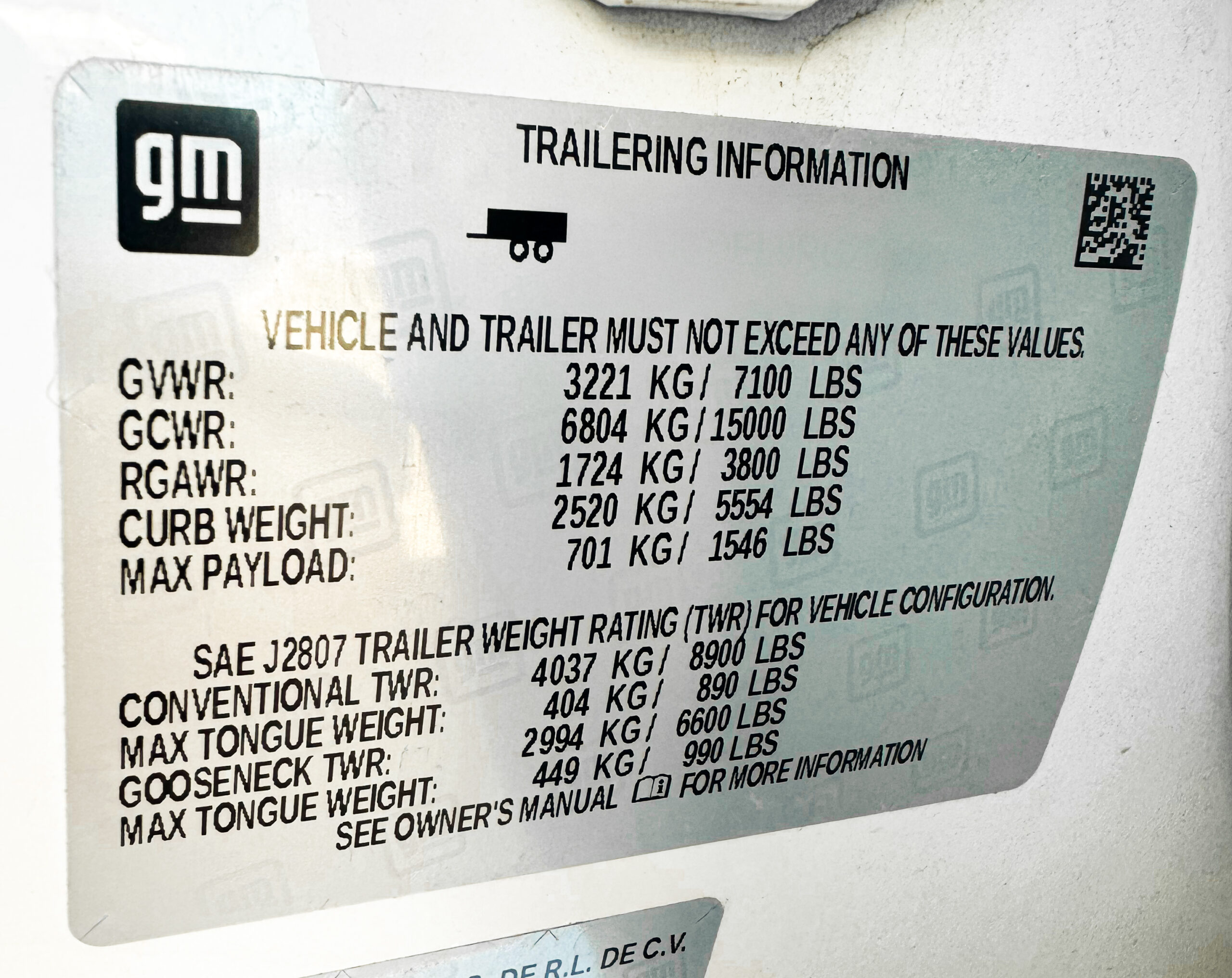
Whether you're upgrading an axle, replacing suspension components, or purchasing a new trailer, understanding towing capacity and load ratings is critical. Misunderstanding GVWR, GAWR, and combined ratings can result in mechanical failure, unsafe handling, and potential legal exposure.
1. Gross Combined Weight Rating (GCWR)
GCWR is the maximum allowable weight of the tow vehicle and trailer combined.
- Tow vehicle
- Trailer
- Cargo
- Passengers
- Fluids and accessories
This formula determines how much trailer weight your vehicle can safely pull.
2. Gross Vehicle Weight Rating (GVWR)
GVWR is the maximum total weight your trailer can carry, including:
- Trailer frame
- Cargo
- Fluids
- Mounted accessories
3. Gross Axle Weight Rating (GAWR)
GAWR is the maximum load each axle can support.
- Single 3,500 lb axle → 3,500 lbs GAWR
- Tandem 3,500 lb axles → 7,000 lbs combined GAWR
However, your trailer GVWR may still be lower than combined GAWR due to frame, coupler, brake, or tire limitations.
4. Curb Weight vs Payload
Example:
- GVWR: 7,000 lbs
- Curb Weight: 2,000 lbs
- Payload: 5,000 lbs
5. Tongue Weight & Load Distribution
Not all trailer weight rests on the axles.
- 10–15% tongue weight for bumper pull trailers
- 20–25% for gooseneck or 5th wheel
6. Towing Capacity Calculator
7. Common Mistakes to Avoid
- Assuming axle upgrades increase legal GVWR
- Ignoring tongue weight percentage
- Overloading based on cargo volume instead of rating
- Mismatching brake and axle capacity
- Neglecting tire load ratings
Load Rating Glossary
| Term | Meaning |
|---|---|
| GCWR | Gross Combined Weight Rating |
| GVWR | Gross Vehicle Weight Rating |
| GAWR | Gross Axle Weight Rating |
| Payload | Maximum cargo capacity |
| Tongue Weight | Downward force applied to hitch |
| WLL | Working Load Limit |
Final Thought – Tow with Engineering, Not Guesswork
Understanding towing ratings is about more than compliance — it’s about safety, braking performance, component longevity, and protecting your investment.
If you need help selecting the correct axle, suspension, brake kit, or hub assembly based on weight rating, our technical team is ready to assist.
0 comments